Swedish 18th century poetry isn't my cup of tea, with a few exceptions.
One of them is Anna Maria Lenngren, a female poet who lived 1754-1817.

She was married to Carl Petter Lenngren who was an editor of the Stockholm newspaper
Stockholms Posten which became an outlet for Anna Maria's works. She also translated poetry and theatrical plays.
She was widely read and liked in her own time, and has continued to be so because her poems has aged so remarkably well. Her style was witty, satirical and humorous and one of her subjects was not seldom the overly proud and ridiculous nobleman or -woman, why I sometimes amuse myself with thinking that Anna Maria and Jane Austen would have liked each other, had they ever met...
But to the point: Anna Maria's poems weren't published in book form until 1819, after her death, but it has been re-printed again and again ever since, and I have the great joy of owning one copy published in 1890.
Besides the pretty cover, it also contains many illustrations by none other than Swedish artist Carl Larsson. The illustrations are late 19th century interpretations of 18th and early 19th century and, I think, quite lovely in their own right.
 I left the poem here so you can see the lovely font! The girl has fainted upon learning that her parrot has been killed by a cat, who's being kicked out in the top left corner.
 The subject of this poem was the "mutton dressed as lamb" thing...
 This poem was written in the memory of Kellgren, a fellow poet and friend of Anna Maria, who passed in 1795. It is he who receives an embrace from the young woman (he did love the fair sex) and Gustaf III, who had died three years before, watches with some amusement from the background.
 An old, right honourable and proud couple. But not even the finest pedigree will save them from the reaper...
 A proposal scene. But is the young lady so virtuous and innocent as she looks? unfortunately, the man won't find out until after the wedding...
 "My late wife"...
 Mademoiselle Lisa is quite accomplished. She makes tolerable bobbin lace and no less than four heels on each stocking!
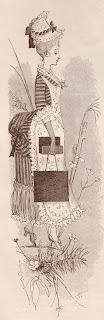 Young Lise marries a count! But all is vanity - in the end, she only becomes the subject of a poem!
"To my dear daughter, if I had one". This poem is still disputed among critics. Anna Maria tells her "daughter" to stay away from the pen and look to her household duties instead. But was it meant satirically or not? The debate goes on.

Is it Lady Catherine and Anne de Burgh? No, but it almost could be! Juliana is raised to think herself above most other people (in "
the old ruins of the manor") but eventually marries below her birth, to her family's horror.
 "Every age has its customs"... The young lady is told to care a little less about her respectability - it will come with age anyway!
 His grace is fast asleep and won't get up for at least another hour, much to the dismay of his creditors who are waiting upon him.
 "The Old Woman"
 The countess and her daughter honour the vicar with a visit. His wife and daughter kiss the countess' skirt hem (a custom that wasn't abolished until 1809) and soon turn the house upside-down in an effort to make the visit agreeable to the honourable guests, who still remain rather unimpressed... Again I feel an Austen reference. Anyone else?
***
I just learned that Anna Maria Lenngren's poems have been translated into English by a man called Philip K. Nelson and published in 1984. One of his translations are available on the Swedish Anna Maria Lenngren wikipedia page, and I think it works very well compared to the original:
- The Man's Last Wish
- My dear wife, listen now
- And promise while you tarry,
- That when I die you'll vow
- That you and Per won't marry.
- My last wish you'll obey now, won't you?
- For otherwise I'll come and haunt you.
- The wife:
- Dear husband, die in peace.
- This promise I am making.
- Your worrying can cease.
- This vow I'm never breaking.
- I swear that Per and I won't wed,
- For I have promised Sven instead.
A little info about the book on
Google books (it's not available there, though).


